 I was browsing through a blog talking about how the person like us look back to his past and forward a question of what to advice a younger-self when the idea about judging actions of one-self, learning from others, teaching others lessons we learn from the past clicked in my exhausted mind.
All this came to my mind in a fraction of a second.
I don't know why my mind drifted into politics when I had these thoughts, maybe because of all the news about elections: elections in Iraq, elections in the Netherlands, and last week first round of the regional elections in France where all my thoughts circulated around it. The news of these election all agree that right parties in France, including president Sarkozy's one received a big slap in the face from the French citizen.
Life is about questions and answers, and we learn by seeking answers to our questions, and this blog had and will continue to have a lot of questions about life. Sharing with other by writing these questions on my blog is one of the ways to find answers for my questions, and learn from others. There are people who never learn from other people lesson and experience and that's why two people know each other and they advice each other, but each fall in the same mistake over and over again. I guess this is some human nature: we advice each other, but we sometimes never take that advice seriously, and fall in the pit
Back to French elections last Sunday: I have been to France twice in the last two months. I talked to people there and the impression I had that no one is happy with the direction and strategy their government is taking, particularly President Sarkozy. In fact there is a growing resentment towards their leader, some called his strategy indirectly as "the Americanization of France" policy. However, Sarkozy's attempt to pull France nationalism away from its people is not the only reason. People there are not happy with the outcome and situation, and this is the reason that they look for another leadership.
This has been proved, of course, last Sunday and we will see the final result next Sunday.
On the other hand, last week Dutch labor party leader, Wouter Bos, has announced his resignation due to family commitments. Shortly after that there was an announcement that the 63 years old current mayor of Amsterdam, decided to take the helm and became the new leader of the prominent political party. Cohen's move has been widely praised, because he will be the party's representative in upcoming general elections in June.
Job Cohen, I want to emphasize, is known for his strong personality and acknowledged political career, so he is not just "another" politician who is trying his luck by going out and spray words against this ethnic group or gather people in a specific park to announce the birth of a new party while bashing another ethnic group.
Yesterday, a survey took place among Dutch citizens and the result was shocking: if general elections took place on the day of the survey, Job Cohen would be the next Prime Minister so easily, on the account of other political parties, such as that of SP and PVV (I rather call it Wilder's political sect than Free Netherlands party).
Isn't that enough indication that voting for Wilders in the last municipal elections was done out of emotional rather than rational look at things?
I wrote about these elections here)
I talked once or twice about emotional factor, and I talked once or twice about how fear is the main reason behind people rallying behind Wilders in last election until this day, but comparing the results of yesterday's survey with the results of the regional elections in the Netherlands a couple of weeks ago shows how the Dutch citizen is looking for a symbol to have them united. Like any citizen from any population living on this planet, no difference between third world or first world country, every citizen in every country is looking for a leader to look up to. Observing the lack of satisfaction with current leaders the people in the Netherlands began looking somewhere else. This has been taken advantage by people like Geert Wilders (among other things he took advantage of, such as bad attitude of some Moroccan teenagers on street and put that attitude on the shoulders of the whole Muslim community all around the country and in whole Europe.
The result is natural when you are afraid and looking for someone to unite you, in fact to protect you: you choose for him.
Yesterday's survey in the Netherlands, and the result of France's regional elections are good lessons for the voter to prepare for the next elections in June. People with extreme ideology, people with hatred against other people must not be given the chance, because these are not the standards for living together regardless of ethnic background, race, nationality.
How many lessons it takes for a human being to learn and to be able to choose what is right and what is wrong?
Or do we need some Yoga to exercise our brains on how to forecast a disaster that might take place in a peaceful country?
But why forecasting? We have enough lessons from the past: Hitler's extermination machine is still in people minds, when he ripped off society from the concept of living together, peacefully.
Tuesday, March 16, 2010
Advise Yourself

Monday, November 24, 2008
Change in Europe, In New Europe
 I read today an interesting article on Nicolas Sarkozy titled “Sarkozy stamps his authority on world affairs” by Ahto Lobjakas. The article starts with identifying the French president as being “unique in the uncompromising manner in which he has directed France's EU presidency from the front.” Taking into account recent moves the French president took regarding the conflict and later the military confrontation between Russia and Georgia, or his opinion on the U.S. missile-defense shield hosted by the Polish and Czech, in addition to the attitude towards the US that took another turn recently. But what I find it more interesting is the articles view on French-German relations, namely, the author is arguing that Germany's Merkel ability to deal with the Russian question: “ Germany is known to back Sarkozy's general course for rapprochement with Russia, although the French president's unbridled ambition is a cause for concern in Berlin.” “Traditionally, Germany is looking to play a balancing role within the EU and the wider region. Writing in the "Frankfurter Allgemeine Zeitung" on November 14, one of the German daily's publishers, Guenther Nonnemacher, said the West -- the EU and the United States -- must continue to engage Russia. Much more than France, Germany appears to be worried about the future of the disarmament regimes affecting Europe after the United States withdrew from the Anti-Ballistic Missile (ABM) Treaty in 2002 and Russia suspended its participation in the Conventional Forces in Europe (CFE) Treaty in 2007.”
This reminds me of the confrontation between former U.S. Secretary of Defense, Donald Rumsfeld and German foreign minister then, Joschka Fischer back in 2003 when Rumsfeld branded European countries that did not support the 2003 invasion of Iraq, specifically France and Germany by calling them “Old Europe”. I am never considered Donald Rumsfeld as being a clairvoyant, but he was right, a new Europe was born. However, it is either he missed that prediction part when he thought that change is not needed in the United States, and that his neo-conservative movement would last forever, at least till it reach its goals. On both sides of the continent there are those who are looking for a change: it is has been proven when Americans choose for Barack Obama. In fact, the whole world is going through changes, political change I mean; there are some countries where regime are resisting such change because it would harm the purpose of their existence, and there are countries who are already took brave steps into changing the course of their political path. Lets take Australia, for example, I realize that problems with the aboriginals still long to be solved, but would the apology by Australian prime minister, Kevin Rudd can be counted as the first step towards that promised change, by extending and offering reconciliation among people of the same country?
There is an wind of change that approaching the whole world, and not only Europe or the United States. There is a different scent in the air, with a flavor of a demand for changing old habits and outdated political attitude. Old school politics needs to go through a process of transformation, to be substituted by a new one. I guess the hide-and-seek between Italy Berlusconi and Germany Merkel would be the only thing left to laugh about, because there are changes in the political scene in Europe – they are still clanging by searching a way to save Alitalia (by negotiating the merge with Lufthansa) i.e. by looking separately into one issue while in fact it is part of a bigger problem within the collective financial system in Europe. The approach by the two leaders has no use anymore, a new political approach is needed. I won’t comment on the approach the German foreign ministry too by prohibiting the broadcast of Lebanese Hizballah, only that it is another expired approach to deal with foreign policy issues. There are new faces in the field, sitting and waiting for their role to be called, their assignment and strategy is ready for implementation. Sarkozy is not the first of those new faces, though, Vladimir Poetin is one of the first of those young, energetic magicians. The difference between Sarkozy and Poetin is that the latter like to play his tricks while watching the public with perspective, though. Nicolas Sarkozy is different from the Russian counterpart; the French president is like another wizard with lots of magical tricks in his pockets. He took people attention by surprise many times because of his fast moves, in France and abroad, some of his tricks brought him success, applause then stardom. At the end and in a very short time he managed to bring back France as a powerful player in the world, surpassing the United States who stumbled in its own foreign policy. The French president made his words heard, managed to cross some what is considered by some old-school politics as red-lines, given examples of his latest maneuvers on the financial crisis (check his speech in Strasbourg on this issue).
There is no doubt that this change taking place in Europe came as a result of seeing the sole super power launching illegal war, a war that was based on lies, that caused hundreds of thousands of killings and as much as it is of homeless Iraqis inside and outside the country. The Europeans watched the U.S. stuck in the Iraqi mud. Without pulling the plug entirely on the already damaged transatlantic relations (it won’t happen, impossible to cut ties like that with a historic ally) European politicians in their respective countries were anxious, especially that common European citizens became too agitated by U.S. policy (as a result common Americans and their reputation abroad was also at stake), this means that European leaders were to find a way to keep a balance to this difficult formula: this was one of the reasons change was essential and a new Europe was born. The winning of Barack Obama in the U.S. presidential elections helped in speeding up the matter and to take a wider look - this can be seen in different speeches and announcements by European leaders and politicians – even to criticize more openly the past and illustrate the consequences and who to blame.
Will this change be challenged? yes, it will, furiously, by whom? Is there a chance that this change can back-fire on those who want it to be successful? yes, but how? A clear answer would be found when a a solution for the current financial crisis is found, and from there change will be faster than anything else this continent has ever witnessed.
Saturday, October 04, 2008
Syria in 2008
This is not my first trip to Syria; I have relatives living in the north of the country, in the coastal city of Lattakia. One thing I cannot argue about Syria in general is the beauty of this country, with its different elevations; green vast areas to the north stretching to the border with Turkey and along the coast line; huge desert to the east that reaches the western borders with Iraq, and the various hills and rocky areas to the south of the capital Damascus.
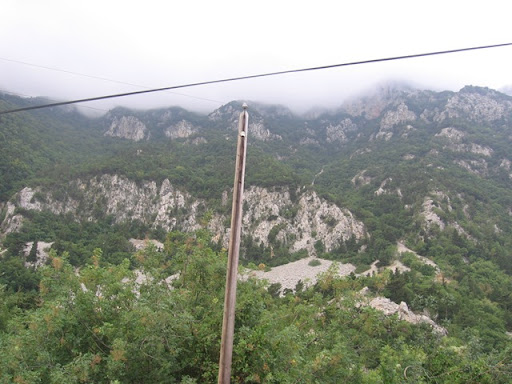
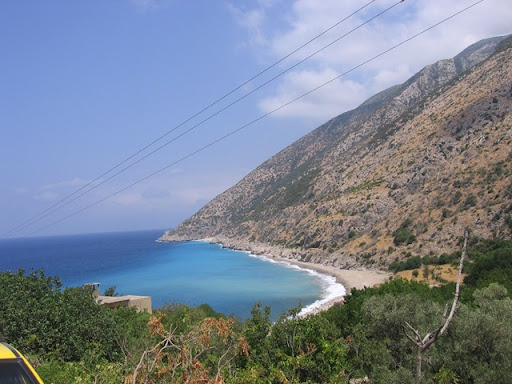
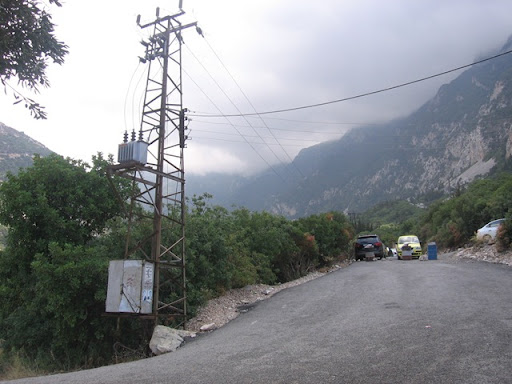
In addition, no one can ignore how this country is one of the richest countries with its historic heritage spread in different areas and provinces. However, travelers can notice the economic hardship, which made it difficult for the country to rise among the most top tourist places in the world. Economic difficulties in the country obviously made its painful impact on its people, especially on this trip, this time, with prices risen triple in a very short time. There is an obvious gap between the poor and the rich (look at the cars on the streets and the models people drive). Compare this one to previous visits I could see improvements in some aspects of life for the ordinary people, but the pace of such improvement is extremely slow. The streets of Lattakia are cleaner than before; Police men are more into their work in organizing traffic on the streets, especially during traffic jams - different from the past experiences when a policeman stops you for no reason and end up putting some money in his hand while arguing to get rid of him. Ah, I almost forget, the police force there is very serious on stopping car drivers and fine them if they were found without seat belts on; a lot of housing projects with very beautiful design have been built; ATM machines in cities became more common, maybe not for all people, but I saw people queuing to get their money from one machine on one of the main streets in Lattakia. However, there is one thing that did not change since my first visit to this city: the look on the faces of salesmen when a stranger like me enters a shop. It requires some long 10 minutes to finally make that salesman/woman smile and give an impression of loosing tension! This became a common thing to me, it bothered me before, especially that there are some shop owners or workers or salesmen who really need some lessons on how to do marketing and how to deal with the client or the customer. Yet, this doesn’t mean that people there are not friendly; on the contrary, they are very friendly and help foreigners when they see one in need.
Anyway, upon arrival I didn’t stay in the capital Damascus except for a couple of hours, visited some friends and proceeded to Lattakia at around 10PM – arrived around 2AM there. This time I decided to rent a car and not depend on taxis while I am in the city, or call the usual taxi agency to take me to other places. I rented a Peugeot 206, which I think it was an Iranian version of that model in the market. I proved those people wrong, those who told me that it is impossible for a person who lives in Europe to drive in Syria. It was indeed challenging, though, in a sense, learning the “snake-method” of driving through cars like the taxi drivers, for example: there is no discipline with road-lanes, suddenly you notice a small yellow taxi (mostly are two cylindered-motors Daewoo model) slowly like a snake moving through in the middle and cut the street to the other lane. Traffic jam in the different main areas in the city of course is horrible, and when this happen some chaotic symphony starts; played by drivers blowing their cars horns from all directions.
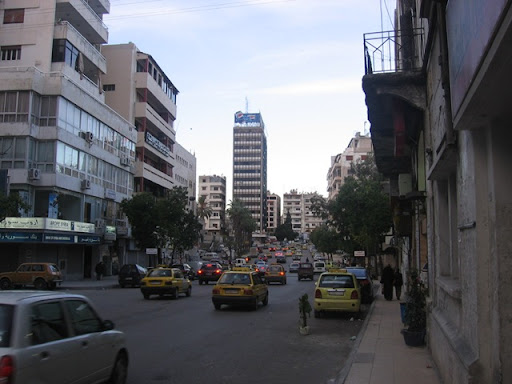
Religion is irrelevant in Syria, not meaning in the negative sense of the word, but Syria is free from committing its people into complying with the rules of the majority i.e. Muslims. I heard that people get jailed in United Arab Emirates if they were caught smoking in their cars during Ramadan! This was not the case in Syria. I could see Syria like “old” Iraq regarding the diversity of its population; consists of many and many ethnic and religious groups. In Lattakia and its surroundings, there are the major Sunni groups, there is also a big Christian community located in certain neighborhoods, such as “The Americani” neighborhood (very beautiful neighborhood). There are also other religious groups, like the Druz, al Murshediyah (link in Arabic), and the Alawyeen communities – the latter compose the majority of the population living in villages and little towns surrounding Lattakia and their presence stretches further to the north of the country and across the borders inside Turkey. For that reason, one can see when going out those who wear traditional custom, such as men with the turban or the typical Shami large trousers, and the opposite to that can also be observed: there are those who are obsessed with the latest hype in fashion and mode, such as girls wearing 12cm high heel shoes and tight jeans. I was delighted to celebrate the holy month of Ramadan while I was there. However, I was astonished to find out that there were a number of shops open in the main market, but I was more surprised to see restaurants open and people can drink or eat (or smoking a cigarette) during the day. Not all the shops are open in Ramadan, though, but the peak in the market usually begins after the Iftar (sunset time) where walking or driving around becomes almost extremely difficult.
Another thing NO one can argue about Syria is the Food, especially starters (or what is called Mezza), such as Tabouleh, Homous, Kibbe, Babaghanoush, Kibbe Nayye, Shanklish, Fattoush, Soujouk …etc Still, all the above would not be compare to the delicious mixed grills they have in their restaurants. By the way, I never noticed that Pepsi became available until this visit to Syria, I might be wrong, but I remember that only local-soft drinks allowed to be sold in shops. In addition, I was surprised to see Pepsi became an official sponsor of a number of local TV shows.
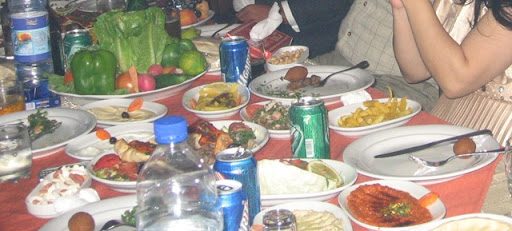
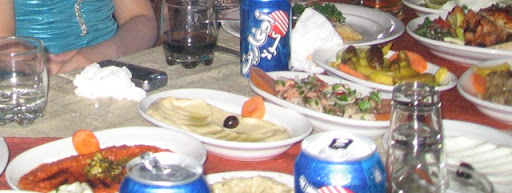
Speaking of TV and the media, to me it was more than obvious the level of bad relations between Syria and Saudi Arabia has reached (especially on private Syrian channels like Dunya TV). That was one direction the media is focusing on daily. Another focus by the media is something regularly been taken care of: the relationship with Lebanon. I was in Syria when French president, Nicolas Sarkozy, visited the country, and how the media kept on for days full coverage on every event and every aspect of that visit – I was surprised, though, and still is, when I didn’t see the Syrian president receiving his guest at Damascus airport. Instead it was the Syrian foreign minister, Walid al-Muallem who was waiting for the French president at the end of the airplane-stairs. Speaking of the media leads to talk about the internet: the Internet in Syria is censored heavily by the government. Internet café is the only place where I could get reasonable internet speed. These internet café is not limited to boys or men only, I have been to internet café’s where young girls and women either browsing the World Wide Web, or talking to their relatives using mic and webcams, or search and apply for jobs. By the way, there are internet services for home users available and offered by the main telecommunication companies over there, but it is very expensive for ordinary people apart from the fact that it is extremely slow and not reliable.
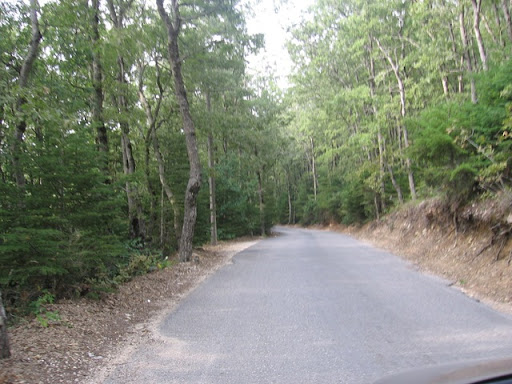
Like on every visit, I won’t let a chance without going to one of my favorite places in Syria, Slenfeh. It is a tourist location, approximately 45 minutes drive north of Lattakia. Some considered it as the highest location in all Syria where nature and fun are combined together. The tourist complexes over there did not change that much since last visit, but Slenfeh is expanding rapidly because of the new villas and vacation-apartments been built in different places on the edges of the mountains there. Many people go to this place because many consider it as an escape pod from the bloody heat and humidity in Lattakia. The prices of goods and costs of food at restaurants in Slenfeh are much higher than in any other place – funny that there are much cheaper restaurants on the outskirts of Slenfeh!
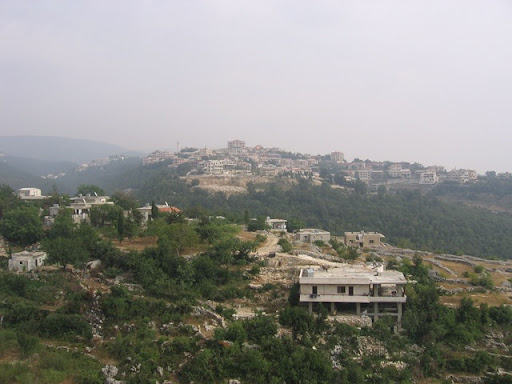
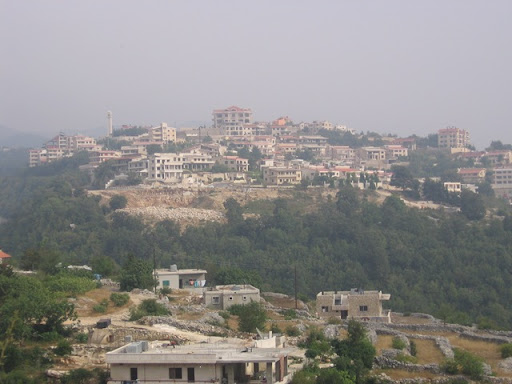
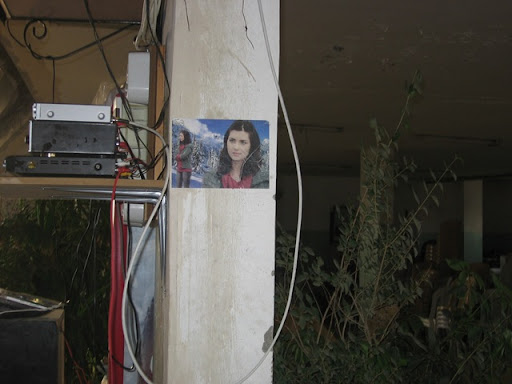
That trip provided me with many aspects of relaxation: I needed change; those who know me personally can confirm how much a hard working person like me deserved some time off from everything related to my daily life. I managed to have long hours sleep, very long hours – I can’t recall when was the last time in my life I did sleep for so long. In addition, going out in the evening and stay late at café’s was also fun, drinking Arabic coffee while modern and classic Arabic is playing in the background – some of café’s and restaurants owners took advantage of some TV shows or movies by putting pictures and posters of their favorite celebrities
I wondered a number of times if it was worth staying longer in Syria, not thinking of how many days I can take days off from work, but I thought that the time I spent there was justified. I came back from Syria three weeks ago. I got a cold immediately one day after arrival, I am recovering, but very slow, I think it also has to do with the change in weather here? Well, maybe this is true, especially that summer did not visit the low lands this year.
Wednesday, August 20, 2008
A President Who Cares!
 French President Nicolas Sarkozy has arrived in Afghanistan to support French troops a day after one of the deadliest attacks on France's forces abroad, where ten French soldiers were killed and 21 injured in an ambush by Taleban fighters last Monday east of the capital, Kabul. According to the BBC, Sarkozy is accompanied by French Foreign Minister Bernard Kouchner and Defense Minister Herve Morin, and was marked by a flurry of helicopters across Kabul. That makes me ask the question if sending foreign and defense ministers would be sufficient in such circumstances, instead of taking the initiative himself, as a president, jump into an airplane one day after the incident and go to Afghanistan. As a president who would like to show his support and solidarity to his own troops in such way, this is something complimentary to the person of Nicolas Sarkozy. However, would that strengthen his case towards the French people in general, especially with opinion polls showed his demise among the people of the republic recently. In other words, and from observation:
Sarkazoy is best for being an international or strategic leader, rather of being an overall leader.
Wednesday, January 09, 2008
Press Conference In Egypt
 In his latest visit to Egypt at the end of last year, and during a joint press conference with Egyptian president, Mubarak, French president Nicolas Sarkozy called on Syria to act using its influence to end the ongoing presedential crisis. The tone used by the French president angered the Syrian officials, and two days later the attitude backfired when Syria decided to cut communication channels regarding Lebanon with France.
 Sarkozy want a new France, a new France in the region, a new and powerful France in the region. This has been clearly illustrated during his visits to North African countries. The aim is economic ties with these countries, and ensure that these countries can be a good candidate to be economically dependent on France. However, this time the tactics is different and the product is not food or military or goods; it is nuclear technology. During the press conference with Egyptian president Mubarak, the second or the third point the French president made in his speech was how Egypt can benefit from having French nuclear technology for peaceful means. Any observer realize that Egypt was not the first North African country to receive such an offer, Lybia is another example.
 Monday, November 05, 2007
Sarkozy In 60 Minutes
This is an excerpt of an interview run by CBS's news program 60 minutes two weeks before the divorce of French president, Nicolas Sarkozy, from his wife Cecilia, after he has been asked about the divorce
Below is from FOX, just some sort of "analysis" on "Sarko" (as American media like to call him) attitude during the 60 minutes interview
It is the interesting the note among the many comments on the second video:
"I love how Fox News always defines pro-Bush as "pro-American," whereas the French who don't like Bush and his repeated lies about Iraq are "anti-American". You right-wingers need to get over yourselves. You ain't America. " I tend to agree with that!
However, from both videos above one can conclude that the new French president is one focus of attention - a big one - by American media.
Sunday, May 06, 2007
Sarkozy, The 6th Son of the 5th Republic
 Finally the results of the French presidential elections came out a couple of hours ago to announce Nicolas Sarkozy, 52 years old former minister of interior, as the winner with more than 50% of the total votes. A lot of people expected Sarkozy to be the winner, mainly because of his tough grip on dealing with internal problems in French (2005 riots on the superb of Paris), but above that his preparation and conduct during this campaign compare it to the way his contender, Segolene Royal, did. Therefore, tonight’s results was no surprise to me or to any other person!
However, there are a couple of interesting observations about Mr. Sarkozy; First of all, in a country like France where its people are very proud of their nationalism and French identity, here we have a president who is originally from a Hungarian father and a Greek mother. Despite this fact, more than the half of the French population voted for him.
The second interesting observation is the sort of a contradiction nature French society has shown during these elections, becuase everyone realizes how Sarkozy represents the departure form the Digol school, which former president Jacques Chirac, for example, and all his predecessors have been always loyal to around the years. Sarkozy made it clear during his campaign that “deep change” must begin in France. A strong figure like of Sarkozy’s can serve many purposes for French people. I have been in France during the last elections, and most of people I talked to during my visit told me that the reasons for voting mainly because of the danger that this candidate or the other might put to their society i.e. not because they believe in the ideology or the agenda or the personal qualities of the candidate. The same thing happened this time, but not with the same scale 5 years ago. Thus, a lot of people are afraid of Sarkozy, and they might voted for Royal instead to diminish the chance foe Sarakozy to win. Part of some people’s fear is related to the expectations for the future, especially with a president who’s known for his high temper, which might make great impact regarding important decision an influential country in the world like France can make.
One thing for certain is that the French are fed up and they want change, and in that case, nationalism can have less than the highest priority. They voted for someone this time whom they have from him a lot of expectations.
On foreign affairs track, there were two messages Sarkozy sent immediately after his win; the first is to ensure the United States that France is taking a new direction and that the US can count or rely on its French friends. The second thing Sarkozy’s call for all countries around the Mediterranean sea to follow a new policy of unity and working together - Sarko is loud about his objection to Turkey joining the EU because he consider it as an Asian country more than anything else, but he offers strong trade and economic partnership! Both message send vague signals because many questions will be asked; one is related to Lebanon and the responsibility especially after last year’s war against Israel, not to forget the speculations of a new era of a new relationships with the Jewish state - his statement about the deep friendship with Israel during the elections campaign made most, if not all French Jews, vote for him. The other question is related to the relationship with north African countries like Algeria and how this relationship will result, especially with the impact on the existed Algerian community in France itself – partially a problem within French society. Last but not least is the relationship with the United States: On which way the United States will rely on its French friends? Will France finally help the US in its crisis in Iraq? And how? Sending finally troops to Iraq?
One thing for certain: Sarkozy is very motivated, energetic and offensive of a kind during his time as the minister of interior, but will this be the case during his presdency? He want for sure to show the heavy weight of a France among all countries in the world in more effective way, but the future will show how!


