Showing posts with label Arab Media. Show all posts

Monday, October 13, 2008

Elissa

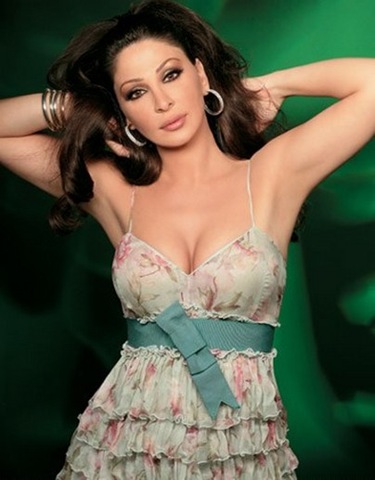
Elissa3 Her name is Elissa, a very famous singer from Lebanon. People started to know her when she appeared on a duet with super star Lebanese singer, Ragheb Alama, in 2000 – according to Elissa, she was already reached fame before appearing on that white linen video clip. She made 6 albums, appeared in different advertisements and commercials, such as for Pepsi a couple of times, and for a jewelry business. In addition, she held a performance at the pyramids of Egypt as the opening act for British superstar Sting. She was also the only Arabic artist to perform in front of the former U.S President Bill Clinton at the Stars Charity show in Dubai, where among other guests present were Queen Rania of Jordan and the Crown Prince of Dubai, Cheikh Mohamed Bin Rachid al Maktoum. Her stardom reached to another level at the end of 2002 when she inaugurated the opening of Kuwait's Virgin Megastore with Sir Richard Branson, the founder of the famous stores. Finally, the success of Elissa has been included in the book '100 Pioneers of Lebanon' alongside Lebanese music legends such as Fairouz and Wadih el Safi, according to Wikipedia.

A couple of days ago MBC satellite channel broadcast showed a concert of Elissa from 2007, but before talking about that I want to give some background information on Arabic music nowadays: Most of, if not all Arab musicians/singers record their albums using digital (or virtual) instruments in addition to live musicians, and with the advanced technology of synthesizers they can make great quality mixed and produced albums. For that reason, to me, watching a live concert of any singer is like going through the ultimate test: either that singer proves to be good on stage and deserve the title of a super star; or to consider that singer pathetic, where he or she would have no option but to keep failing musically and on stage in front of their fans or those watching him on TV. Some of those horrible performers (shame to call them singers in the first place) create a sort of a status que to let the audience accept them with such failure. With a lot of money being poured on such people, by consider them some commercial product that would gain a lot of profit through their image rather than their musical quality, they would remain to be seen on TV talk shows, their songs would be played every single hour daily on Radio stations, and their photoshop-manipulated pictures would be on the covers of magazines for years to come. Elissa is one of those samples.

I watched Elissa live on TV a number of times before… two conclusions: First, Elissa does not know how to sing; second, Elissa does not have any presence on stage.

The concert I watched on MBC a couple of days ago did not make any change in opinion: As it is the case with most of her live concerts; Elissa came out from back stage wearing a long elegant party dress with an eye-popping cleavage (her ultimate weapon – well, maybe this time it was a bit bigger than previous times!) She walked with the same look on her face: absorbed, lost in some thoughts far away from time and place… or shall I better describe it as a look of a dump? She stopped in the middle of the stage, nervous, maybe worried? Suddenly, as if she remembered something and before it was too late she turned her head to the right to greet the maestro who was conducting the group of musicians playing her songs on each side of the stage. During the whole concert Elissa did not have any interaction with the public, except for a few cold smiles here and there. She was most generous with the bearded maestro where she exchanged smiles and gestures. Oh yes, to be entirely fair: she exchanged smiles with the chorus standing in the dark at one end of the stage.

On every intro of every song she bursts into a deafening “aaaaaahhhhh” with eyes closed and mouth wide open – is she trying to tune her voice with the music melody played in the background? Or is this became another dump habit of hers? It can happen once, twice, but not with every intro on every song she begins whining and moaning loud as if to give a fake impression of being deeply emotional when hearing that melody.

I don’t think that having the flu made me so agitated by Elissa’s voice that night, because all who were sitting in the same room with me were became extremely upset with such joke.

Truth hurts: Her face was not of a very happy person (or shall I say hidden rage) during an interview on Elissa5 MBC’s celebrity talk-show, Al Arrab (The Godfather) when asked by host, Neshan Der Haroutiounian, when he told her “According to critics, when someone listen to an album by Elissa, it is depicted as some gorgeous bride on her wedding day; all pretty with the most beautiful dress and everything, and people listen with joy to your voice … on stage it is another story… after some half an hour of singing live some critics put your voice in the category of those singing out of tone, and other critics refer this to some poor or limited ability to sing in the first place.” Elissa’s admitted that “in the past I used to sing because I like to sing, and I used to go out-of-tone… I do that because I couldn’t listen to my own voice when singing… and it is not only me, all singers do that” A super star, as she claims, the second richest female signer in the Arab world (from sales of her albums) is saying that she is still learning how to get over the fact that she is tone deaf?
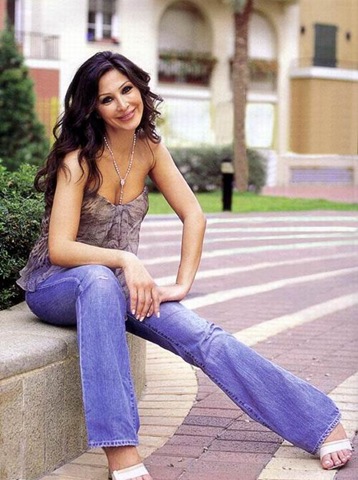
A lot of critics I read on the Internet or while watching TV about the deteriorating status of Arabic music, compare to the old days when the focus on music as a prestigious art used to be the highest priority, rather than focusing on the boobs and curves of female singers. Again, don’t want to be misunderstood, there are good female singers around, take Yara, for example, I didn’t like her last album but still love to attend her concerts or watch her on TV, why? I watch her and enjoy her music, because I feel that Yara is righteous to her music, and to her fans, to say the least. If Elissa can read this post, maybe it is useful to take a look and learn from this guy, how to stay on the same melody without going out-of-tone.

I started this post mentioning Ragheb Alama, just for the information; there is a guitarist in his band, a big man with light beard and moustache playing a red and white Fender Stratocaster. That guitarist plays very good, my compliments goes to him. He used to be the guitarist in Elissa’s band some years ago, and I watched him beautifully playing Elissa’s songs in different live performance on TV. Speaking of TV, would like to thank MBC, because since the end of Ramadan and on every night the past week, this TV station gave me the opportunity to watch a number of concerts of different Arab singers and musicians. I liked the concert of Lebanese female singer, Nancy Ajram. I can’t say that I enjoyed it 100% because the overall sound of the band playing (except for Nancy’s microphone) was extremely low and too much echoed. I don’t know if the acoustics on that venue was the right place for music shows, or is it the fault of those filming the show: no experience on how to mix the sound well and bring it right for TV viewers! However, I am not a fan of Ajram, but her new band, led by the great Basim Rizq (this man is a genies) did a wonderful and enjoyable performance.

Back to Elissa, in 1992, Elissa was still seeking for fame, so she participated under the name “Allisar” in Studio Al Fan, a sort of Super Star broadcasted on Lebanese TV in the 1990s. Elissa was asked about the most important factors for a singer to be always remembered by his fans. Her answer was “first of all the voice; second is good presence when going live on stage; third is good performance; finally musical knowledge. “ This is very sad; because I don’t see any of the four apply to this singer in a way or another. My suggestion is to focus and stick to one sort of performance; she did that on the Mission Fasion 2007 show. Another suggestion: I beg you, Elissa, please don’t sing covers of old Arabic songs; you butchered the whole melody from start to end.

Thursday, August 21, 2008

Crescent of Ramadan

Now that the holy month of Ramadan is less than two weeks to begin, I thought that news and some internet sites will start the same every year story about the crescent and what is right and what is wrong in following the sign that mark the beginning of the holy month. Every year, the debate is around the same theme: whether we have to believe in mathematics and forget the old method of relying on eye-sighting of the crescent.

I think that many realized that news and interviews debating this issue became for many something un-relevant, even some mentioned that talking about this subject again and again is a sign of how backward Muslims are, by not relying on science in dealing with a simple issue like that, in spite of the fact that most those are considered pillars in physics, philosophy, chemistry, and astrology sciences came from that area and believed in this religion.

The latest heresy about eye-sighting the crescent of Ramadan is when some reported on websites and to government officials about seeing a second moon appearing next to "our" crecsented moon!

Wednesday, November 21, 2007

Interview With Sheikh Ali Hatem Al Sleiman (Updated)

Following are excerpts from an interview with Sheikh Ali Hatem Ali Sleiman of the Al-Anbar Salvation Council, which aired on Al-Jazeera TV on September 24, 2007.


Ali Hatem Ali Seliman: We must distinguish between the noble and courageous resistance and those reckless, filthy people, who have come here – each with hair down to his knees. Brother, we must distinguish between black and white. In Iraq, the word "resistance" has become derogatory, because of the confusion in terms. It's best to speak out so that everybody in Iraq knows: The Al-Anbar Salvation Council, the Al-Anbar tribes and their military wing, and all the good people of Al-Anbar have never brandished their weapons against any patriot fighting the occupation. By Allah, this has never happened. We have used our weapons only against those extremist, filthy people, who have created this confusion, and made the world view us with contempt. Our role is to deal a blow to Al-Qaeda and the militias, wherever they may be. The militias, by the way, also play a role in Iraq, when it comes to the displacement of people and mass murder.
[...]
Ali Hatem Ali Seliman: Let the American president know that when the heroes of the Iraq tribes... Neither he nor Rice – that sheep who drove our people out of their homes – nor anybody else will be able to enter Al-Anbar, when the people of Al-Anbar get the province and all of Iraq on their feet.
[...]
Ali Hatem Ali Seliman: [The Americans say]: "Our forces liberated Al-Anbar." What, your forces liberated Al-Anbar?! With all due respect, that is disgraceful. What, your forces are capable of liberating Al-Anbar? Your forces got into trouble, just like us. The American army got into several problems: It should be in charge of traffic, it should be in charge of building, whatever. We all got into trouble because of the democracy of the "effendi" Bush. [Bush] was not welcome in Al-Anbar. No one knew he was coming for a visit. It does not honor us in any way to host someone like that. We have nothing to do with him. Politically, we have people who represent us on the Al-Anbar Awakening Council and the Al-Anbar Salvation Council. Let them reach understandings with [the Americans]. We have nothing to do with any politician – not the president and not politicians of lower rank.
[...]
Ali Hatem Ali Seliman: By Allah, shame on people who say that the Al-Qaeda members are Iraqis. Them, Iraqis? Who attacked us? Weren't we attacked from Dhahran and the other Saudi airfields? Weren't we attacked by American missiles and planes which came from Arab countries? Those despicable people should be ashamed of themselves. All they have learned is to say meaningless things. They should stop exporting their Salafis... Not Salifis, I mean those extremists, who were sent to Iraq to wage Jihad. Let them wage Jihad in their own countries. Syria is occupied by Israel, and the Arab countries are occupied by American and foreign bases.
[...]
Ali Hatem Ali Seliman: Listen, my friend, let me tell you one thing. I swear by God that whoever sets a foot on Iraqi soil and dares to insult us and our honor – we will wipe the floor with him, get it?
[...]
Interviewer: Sheik, from where do you get all your aid, money, and weapons?
Ali Hatem Ali Seliman: Oh, do me a favor! The Saudis know all about the weapons we have. Saudi Arabia, Syria, and Jordan have complained about [weapon] smuggling. In the days of Saddam, even helicopters were smuggled. Four-barrel and single-barrel missile launchers, mortar, rockets, PKCs – we tribes have all that. Brother, we don't have to beg anyone for these weapons. As for finances, what has the Iraqi government ever given us? I challenge anybody who says that I took a single dirham. Some time ago, on Al-Arabiya TV, or perhaps it was your channel, that black woman from the American embassy said that they were allocating 26 billion dollars to support the tribes. I don't want their billions, and we didn't get a single dirham from them.

The link to the whole interview is here (Arabic)

I watched Sheikh Ali on a number of occasions and on different Arab channels. His concept is simple: the unity of Iraq, purging Al Qaeda elements from other Iraqi provinces, but this is new, by confirming that "the Awakenning" of Al Anbar province was independent from any US support, or let me say, it is the first time I hear / read Sheikh Ali mentioning the issue of US support in that context.

Update: below is another video interview with Al Jazeera


Sunday, October 14, 2007

Bab El Hara 2

The final episode of this series in its second part has ended last Saturday. Bab El Hara is really a great series ("Bab" means gate or door in English, and El Hara means Neighborhood, or district)! The title of this series episodes refer to the main gate of a neighborhood in old Damascus, Syria, and the events surrounding the life of the inhabitants of that neighborhood with each other and towards others from nearby neighborhoods. Like millions of Arabs around the world, I was paralyzed on my seat watching this show every night from 9PM onwards - I used to watch it for a second time on another channel at 10PM - it sounds crazy, in the weekend I watched it during the day for a third time sometimes! I can’t recall when was the last time I followed every single episode of an Arabic show. There are many reasons I loved that show; one for sure is simplicity; no gigantic special effects (it is not Star Wars), neither the useless overestimated budget applied on production like many Egyptian drama series in recent years. I also loved mostly the little details on every scene (big salute to the director, Bassam Il Mila), such as the scene when women from the neighborhood as a group visited Suaad; The focus of the scene was on the group of old women with their daughters entering the house and the way they greeted each other after long time no see. It was beautiful to watch small details like young Khairiyah sneaking through the other women and walked exactly behind her mother with a shy smile on her face. There were many other small details I considered adorable while watching Bab El Hara, a gesture, a wave and even a movement by a man or a woman, all were done perfectly. The atmosphere reflecting Damascus in the early 20’s century was so real and believable, from the grocery, rituals of Ramadan, the food, the customs, the alleys in the neighborhood, even love. The relationship between the different characters, old and new captivated the hearts and minds of all.

I don’t know if it was the director who is so smart, or the actors (main and secondary roles) are so perfect and professional, or both? Each character played by each actor was done in thrilling and astonishingly excellent way. It is the first time that I fail to find a point of criticism towards an Arab show ever.

I read that in Arab countries it was like martial laws imposed during the time the show time. The effect on Arabs in Europe was no difference, the majority was glued in front of the television screens waiting to see what will happen to Abu Isam during the period he locked himself up in his shop, or what is the next move by the wicked Firial (Um Taufiek), or how and when the killer of the neighborhood’s leader, Al Za’eem, will be caught and justice prevail… The episode was packed with thrilling events surrounding numerous characters. The influence the show made has reached real life in some Arab countries: I read that young teens on the streets of Lebanon adapted the same terminology and nicknames used in the show, such as calling the brave by the name of “Ageed”, which the nickname of one of the main characters, Abu Shihab, or children shouting in the streets “beleele …” imitating the villain, Abu Ghalib in the series, or some people who exchanged SMS messages wishes each that God protect him from the magic of Um Abdallah (played by the great actress Muna Wassif).


I loved the end, and loved the way the two main actors in the show, Abbas Il Noory (Abu Isam) and Samer Al Masry (Abu Shihab – Ageed) appeared at the end titles wearing suits and without the familiar make up we used to see them on that show – they looked younger, actually more handsome, and with cute sense of humor indicated that part 3 of Bab El Hara might have a lucky woman will be the wife of Abu Shihab.

Sunday, July 08, 2007

Perfect Imitation

This is hilarious, an Iraqi artist imitating all Arab actors... enjoy

Wednesday, June 27, 2007

Quraish

I came across an article by coincidence about the first Real Time strategy game in Arabic, called Quraish. The game is made by a Syrian multimedia and technology company called Afkar Media Productions. Quraish is a 3D real time strategy game about the first 100 years of Islam. The name of the game is based on the name of the chief tribe used to live in Mecca, Saudi Arabia. There is a contradiction between the name of the game with the content of the game, which focus on Islam rather than on a tribe.

According to the makers of the game, it is not about war and conquest, but more to manage and administrator like any real time strategy game of that kind, such as Command & Conquer Generals, or Age of Empires series, or even Red Alert, so no need to explain more how these games are supposed to be played with! The game consists of four campaigns, with more than 30 levels. The player can play the role of Bedouin sheik and “earn your tribe respect”, or command an army “as the only hope of the new born Moslem state, defeat the gathering tribes round your capital and push them back through the burning sands of Arabia”, or simply follow the conquer routs of Muslim heroes and generals like Khaled Ibn Al Waleed and Abu Ubaida Al Jarrah. The game has been made in a way to reflect every detail of each culture each character the players takes; this includes buildings, custom, military and war tactics…etc

The main goal for the makers of this game is to answer questions such as: how Islam and Muslims spread their religion to the different countries? Where they any different from any other military force around history? How did Muslims deal with other cultures, religions and societies they met? It is not only about leading an army to victory, but the game also expands for the player to perform other tasks such as the preservation of water resources, ensure safe trading routes and maintain good economic situation for the tribe or the nation.

The official website of the game is very well designed but it has not been updated since October 2006. However, it seems that the makers of the game and the designers of the website wanted to ensure that anyone from any country in the world can be familiar with the timeline, the characters, the battle names and events, and even with tribes. In addition, there are plenty of information on the way the game was made, with many pictures and screenshots. The game can be played in both Arabic and English (with help of American-Muslims). There is also a discussion forum where people already gave feedback and many offered their help and suggestions to improve the game in many ways.

As usual with discouragement factors in the Arab world, there are two common problems: first is marketing, especially with the advert of seeking international distributors. The other is budgeting, which is also plays a role in improving everything! In addition, I wished there was a kind of a demo can be download from the website, so a portion can be seen of the game and this in itself can be as a marketing tool for the game itself.


The official website is: http://www.quraishgame.com/

Wednesday, April 25, 2007

Another Planet Earth

While I was driving to work early this morning, I heard on the radio that European astronomers announced today the discovery of a new planet more than 60 trillion miles from earth orbiting outside our solar system. The significance of that discovery is their assumption is that this planet has the most suitable conditions for supporting human, with temperature lies between 0 and 40 degrees Celsius – theoretically, this also indicates the existence of water in liquid forms on it. Its radius is 1.5 times the radius of our planet Earth, and has a mass five times the mass of earth, which scientists predict that this planet is either covered with rocks or with oceans.


Later in the day I opened alarabiya news channel website to read the news, and the same news about the discovery of the new planet was there. The interesting part about this news is people’s comments. Some were skeptical about the existence of life outside planet Earth. However, almost half of the comments took a religious course regarding the subject: many praised God and the creation of the universe, some backed up this discovery with verses from the Quran and some disapproved it using the same in regards to the existence or non-existence of extra-terrestrial life. There were some obscured comments, such as that of someone who wrote “God gave us another chance [with this discovery] to live together, Arabs and Jews on it”. Other comments emphasized that this discovery is the sign for the re-appearance of the Imam Mahdi, and the approach to the moment at the end of time!

Others, many others, were sad and wrote about how Europe and the west in general became advanced with their technology in which wonderful discoveries like this are made, while Arabs nowadays are still behind and plagued with dictatorships, ignorance, poverty, extremism, corruption, agony, wars… etc In fact, many of the readers pleaded to alarabiya website to put more news about science and technology so people can learn and get more educated from it. There are some who expressed their grief for the future of the new discovered planet because “we humans will turn that planet into a play-field for evil and bloodshed”. It is very interesting that some of the readers already predict a universal war that will wipe out human race entirely and that “the new planet is too far, until the time we discover ways to travel there, the ‘war’ will be already took place”!!!

One reader regarded the newly discovered planet as the ultimate alternative for our current planet, especially with the increasing danger of global warming and what might result from it in the future.

Other readers suggested sending all extremists to live on that planet and “let us here to live in peace” – or the opposite for others who recommended full immigration of human race except for extremists and fundamentalists to do what they like to do most!!

Not all comments were that serious or darkly-viewed; there are comments that showed sarcasm, humor and ambition in some cases, such Azzoz who prayed to God that the planet has its own inhabitants who can play football in order for us to arrange with them football tournaments called “Football League of the Planets”. An Iraqi reader wrote that the discovery is a problem, big problem if people leave earth for the new planet, because “we won’t be able to sell our oil to anyone, we won’t be able to get medicine, electricity…etc” and for that reason he “decided to buy a camel, before camel crisis happen”.

Some guy with the name of Ahmed asked if there is Khat (or Qat) on that planet, and if not, then he is not willing to go!!

Another guy asked if he is allowed to live on that planet, but has one condition: He doesn’t want the following to live there: neither Bush nor Blair… neither Arabs nor Jews, no republic or monarch state systems, no thieves or drugs… but he was wondering if a peace of land there is cheap or not! Speaking of Bush, one warned that this planet is now doomed, because Bush will sooner or later lead a campaign to bring democracy there! But he showed some sympathy for the American president by “hoping that oil is can also be discovered there, so Bush won’t be disappointed and take that long trip for nothing”. Yasmin said that she wants to have her honeymoon there, while Blend did some mathematics by writing “the planet is huge, so buying a piece of land and building a house will be very cheap, but due to its massive gravity, the planet is not for fat people, because someone with 100kg on earth will be 220kg on the new planet”.

Another Iraqi asked if there is a place on that planet for 27 million of his fellow men and women!

Finally, there were many praises by alarabiya readers for the Egyptian singer, Midhet Salih, because he was the one who wrote a song predicting the existence of another planet and that he wants to live on it.

For those who can read Arabic, the link to the article is here

Sunday, October 01, 2006

Don't Bomb Us - A blog by Al Jazeera Staffers


I might be a little bit late in finding this, but it is interesting to know that some employees from Al Jazeera network are blogging.

The link is above, and can also be found here

I am not doing some kind of a propoganda here, I just thought the blog worth some reading.

Saturday, September 30, 2006

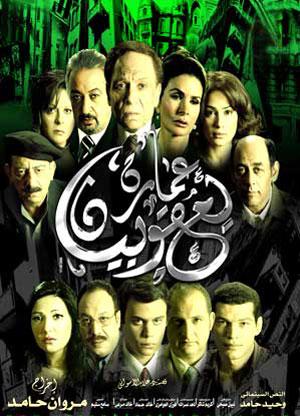
What made me like “Yacoubian Building”??

The question popped up when I was reading the comments posted by my new friend, aNarki about the movie “Yacoubian Building”. I thought: “why not write about that movie?” It’s worth it! But before I do that, I want to thank aNarki for his kind words about my blog, especially regarding Iron Maiden. They are the best… and their new album, “A Matter of Life or Death”, is just another masterpiece of music!

OK, let’s talk about movies, about the movie ““Yacoubian Building””. I didn’t have the chance to watch the movie in theaters, simply because no single theater showed it, or not? So finding the movie on the internet and download it was the best alternative. Every person I know was busy searching on the internet, trying to get a proper copy – For some time, the only “proper” copy can be found on the internet was missing more than half an hour from the total time! However, I had the chance to watch the movie at my best friend’s a month ago. His family and mine share passion for watching movies, and we are used to arrange a specific date from time to time on a weekend to meet and watch a movie. This time they suggested “Yacoubian Building”… They managed to get the full version.

Did I like it? Yes, very much – otherwise it won’t be in my profile’s favorite movies list. Why did I like it? Because it was not like any movie! I will come to that later, so keep on reading. Was it a very long and boring movie? Yes, it was a VERY long movie, but far from considers it boring for a bit. Should I tell more about the story? No, better watch it, and if you want to have some overview, check the movie tralier. Word of advice, don’t look for articles on the internet if you didn’t watch the movie yet, it contains many spoilers. Is it true that the movie was considered the most expensive movie made in the history of Egyptian cinema? Yes, it cost more than $3 million. Is it true that the movie contains a number of adult scenes, which are considered not appropriate for some viewers? Well, the answer is yes, maybe one of the reasons why censorship in many Arab countries chopped off many scenes from the movie, if not totally banned in other countries! Did the film reached out to the level of international standards in movie making? I guess so, I hope so! Otherwise it wouldn’t be enlisted into the Oscar nominations for next year for the category of ‘best foreign film’!

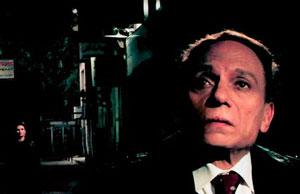
To start with, I couldn’t hide my aggregation towards the dark and pessimistic view of most events and characters alike in the movie. What made me also little sad is the “concept of comparison” between past and present: by considering the past as very nice, and how Egypt from social perspective went gradually down hill in the last 30 years… hey, that was not a spoiler, for two reasons: first, we all know that this is the reality, unfortunately; yesterday is much better than today in most of Arab countries. Second, I am sure that millions of people watched the trailer of the movie tens of times on TV channels, especially watched the legendary Adel Imam’s rants: “we live in a mutant society…everything was better in the past…”

However, that did not spoil my enjoyment of watching the film, especially with the development of the story or pack of stories, minute by minute.

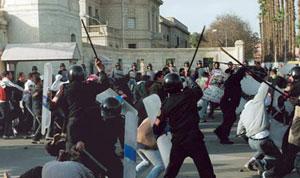
Everyone knows (by now) that the movie dealt with a number of critical (and for some sensitive) subjects in Egyptian society. Well, it is not fair to say this, because these subjects are also present in other Arab societies, and not limited to Egyptian. For instance, the movie is hit indirectly hard on the issue of government corruption: this theme has been dealt with in many Egyptian movies, but in this film it did not need a scientist to figure out the hints to certain high-level corrupted political figures in power from past and present Egypt!

Corruption was not only about money and power; the movie showed a wider aspect to corruption when very sensitive issues like poverty, injustice, homosexuality, and even Islamic extremism were related. In addition, showing the contradiction in the behavior and attitude of most of the characters was the most obvious (and dangerous) dilemma in society, by letting the viewer sees certain character believe in something, express his or her beliefs very loud, and then act to the opposite of these beliefs – and I am not talking about religious belief, only, it includes love, respect, successful career, even humanity and simplicity in dealing with each other!

It didn’t stop to that limit, the movie also showed how a person can play the role of a rebellion against his or her principles, by becoming something new, good or bad, resisting these principles they grew up with, and for some is influenced by the same people who preach these principles. On many occasions and with different characters in the movie, those people do the extreme just to take chances where he or she can hopefully see a blink of a light in a dark and somber reality.


Speaking of power and abusing power, this has been shown in the movie like in any recent movies criticizing the political system in Egypt. What differentiates this movie from other movies is how it showed those who seek power as tyrants, but at the same as victims of a bigger game. It didn’t limit this to certain characters of a particular life-style, but it included others in society from low and high classes, people from different faith and beliefs, residents from various locations and areas. They were either having been forced in participating in this bigger game or choose to do so for personal reasons.

Homosexuality as a topic in the movie did go further than the common theme (or what people think the common theme) when it showed unfairness for some due to a certain situation, even for some it has been used as a tool for terror! I don’t recall if there is a similar Arabic movie that showed this subject in the way this movie did. I thought of another Egyptian movie, I think it was called “A Cat on Fire”, starring the great Noor Al Sharief. That movie can be the only one I can think of to might compete in dealing with this subject.

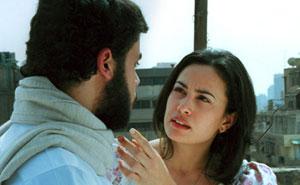
I was not surprised to see terrorism and Islamic extremists have their share in this movie, especially in a film where Adel Imam plays in it. Check “Al Irhabi” or “Irhab we Kabab” and many more. Even in “Arees min Jiha Amnia”, you see the reference to this subject when the father was trying to stop the wedding of his beloved daughter by any means. Interesting to see the movie tackle the issue of religion and link it to other social elements in Egyptian society, such as poverty, and ambition. Both, especially in case of ambition, many people believe (some of them are right with such an opinion) that the first step to make their dreams come true is by joining certain group or community. This is natural instinctive behavior for humans to feel that way - anyone heard of Maslow’s Hierarchy of Needs? In the movie, this has been tackled beautifully when it shows someone with a target in life, trying his best to reach that target and find that joining a particular group will help making his dream come true. Interesting, though, is when that person finds himself being rejected by this group or community, look for another group, the result became disastrous, then to another group and so on and on and on. More interesting when we see the dreams of that person take another direction, and with same motivation he pushes himself in order to fulfill that dream. This topic was not only emphasizing on the young boys and girls who are looking for a chance in their cruel world, and where their chances in more than one occasion shatter, it also shows middle-ages men and woman, divorced or widows, single or married, all searching for their dreams with dust from brutal reality almost blinding their eyes.

I agree that “Yacoubian Building” for some is an uncomfortable experience, but the movie did not generate all that fuzz only because of homosexuality or government corruption or social degradation, rather than it shows much sensitive social wrongness within Egyptian society in a complex and fully completed chaotic formula. In Arab countries, the movie was tabooed because it gave deep & open illustration in dealing with this subject. Some called it “crossed the line of social principles”. However, In the west, critics were very positive because they say that the movie has dealt with problems in Arab society in a very frank and open way. Some went further by saying that the director of “Yacoubian Building” is trying to change Egyptian society… I find it a little bit exaggerating … but wait… is he??? Is this true?? Or is it that the movie was just overrated… let’s says politicized by some of those who call for “political and social reform to Arab and Islamic world”?